
- Lawn Care
- Gavin Sheaf
If your lawn stays thin, patchy, or slow to improve even though you fertilize and water consistently, the problem may be underground. When soil is compacted, it keeps air, water, and nutrients from reaching grass roots. Core aeration relieves that compaction, while overseeding introduces new grass into thinning areas. Together, they're one of the best things you can do for a thicker, healthier lawn.
Jump To:
What is Lawn Aeration?
What is Overseeding?
How Aerating and Overseeding at the Same Time Helps
Is Lawn Aeration and Overseeding Necessary for Every Lawn?
When Should You Aerate and Overseed in Central New Jersey?
FAQs About Lawn Aeration and Overseeding
Professional Core Aeration and Overseeding from Green Valley Lawn Care
What Is Lawn Aeration?
Core aeration uses a machine with metal tines to pull small soil plugs, typically two to three inches long, out of the lawn. The openings let oxygen, water, and nutrients reach the root zone. Turf aeration is especially valuable in Central New Jersey, where many properties have heavy clay and shale soils that compact easily under foot traffic, mowers, and other equipment.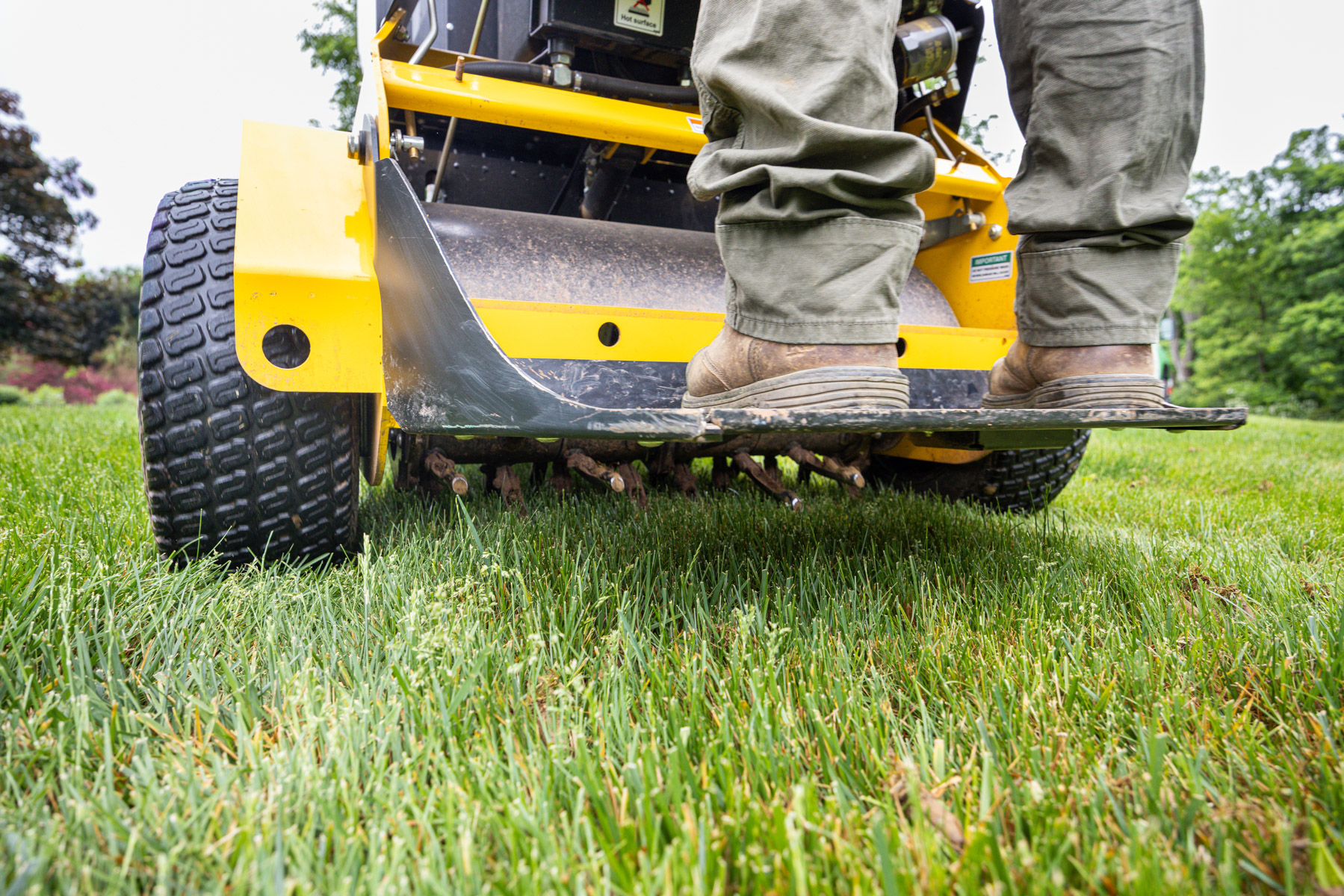
Benefits of Aerating Your Lawn
Lawn aeration benefits build over time by relieving compaction and giving grass roots more room to grow. The holes it creates improves the air and water movement into the soil, supporting deeper roots, especially in the fall when cool-season grasses are actively growing. In addition, the soil cores left on the lawn return beneficial nutrients and microbes to the soil surface as they naturally break down. All of this helps to decompose the thatch layer, reducing thatch build-up over time and creating a healthier lawn.
What Is Overseeding?
Overseeding spreads new grass seed into an existing lawn without removing the established grass. In addition to the natural thinning of your lawn over time, these factors can contribute further to thin or bare spots:
- Drought
- Disease
- Pests
- Poor cultural practices, like mowing too short (mow height in the summer should be around 4”)
- Shade or root systems from nearby trees
- Soil compaction from foot traffic or equipment
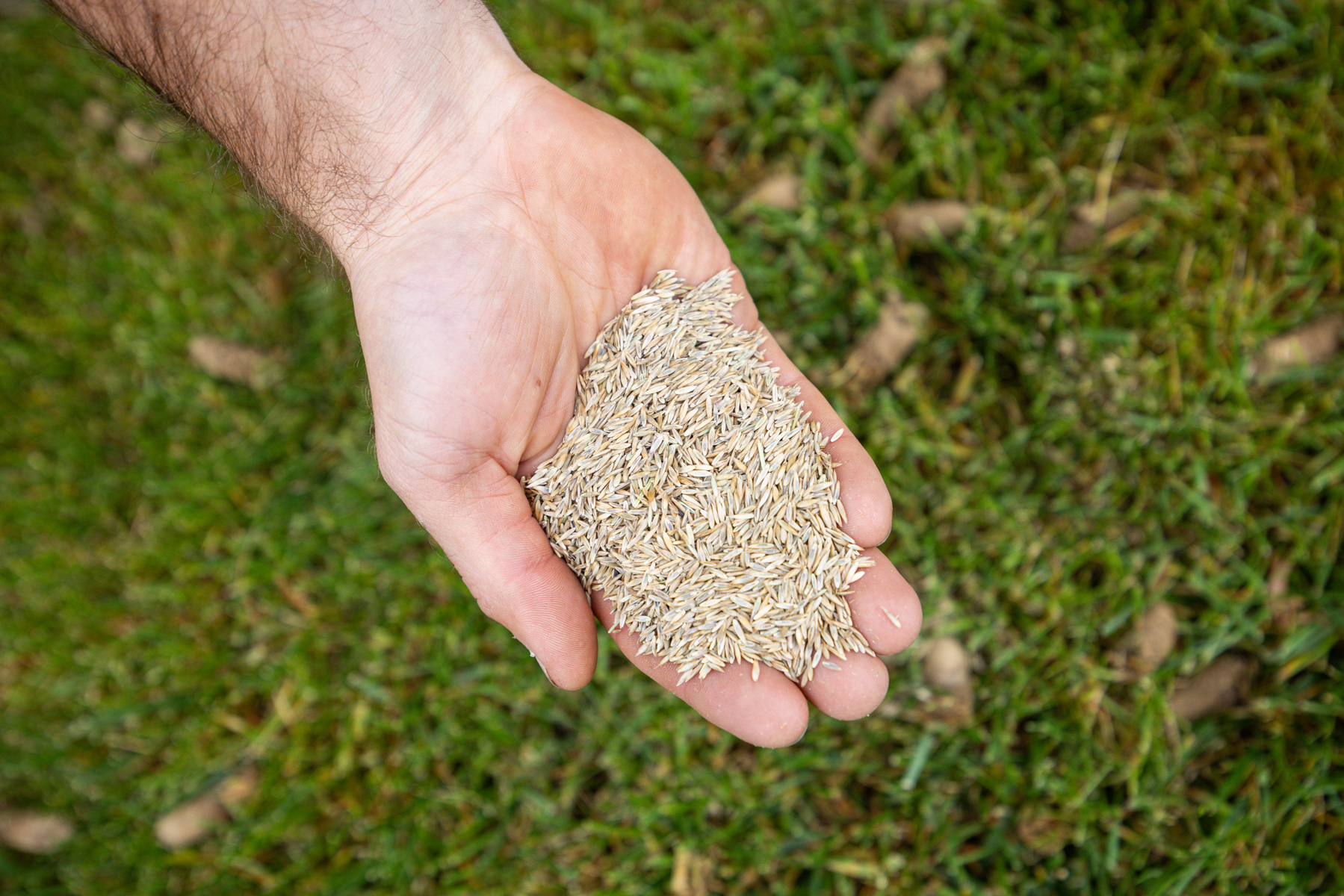 Overseeding helps replace the thinning and lost turf. For Central New Jersey lawns, turf-type tall fescue is a strong choice because it's durable, and handles heat and drought better than other types of cool season grasses commonly planted throughout NJ once established.
Benefits of Overseeding Your Lawn
A denser lawn looks fuller and more uniform, and provides the best defense against weeds - a thick, healthy turf. Some weed seeds, including crabgrass, are “photoblastic”, meaning they need light to germinate. Thick turf keeps light from reaching the soil by creating a shady canopy over it. It’s important to note, however, that overseeding won't eliminate existing weeds, so don’t forget to continue your weed control program throughout the season.
How Aerating and Overseeding At the Same Time Helps
Seed needs direct contact with soil to germinate effectively. When it's spread over the top of a lawn, much of it never reaches the soil, and germination rates drop dramatically. Aeration solves that problem.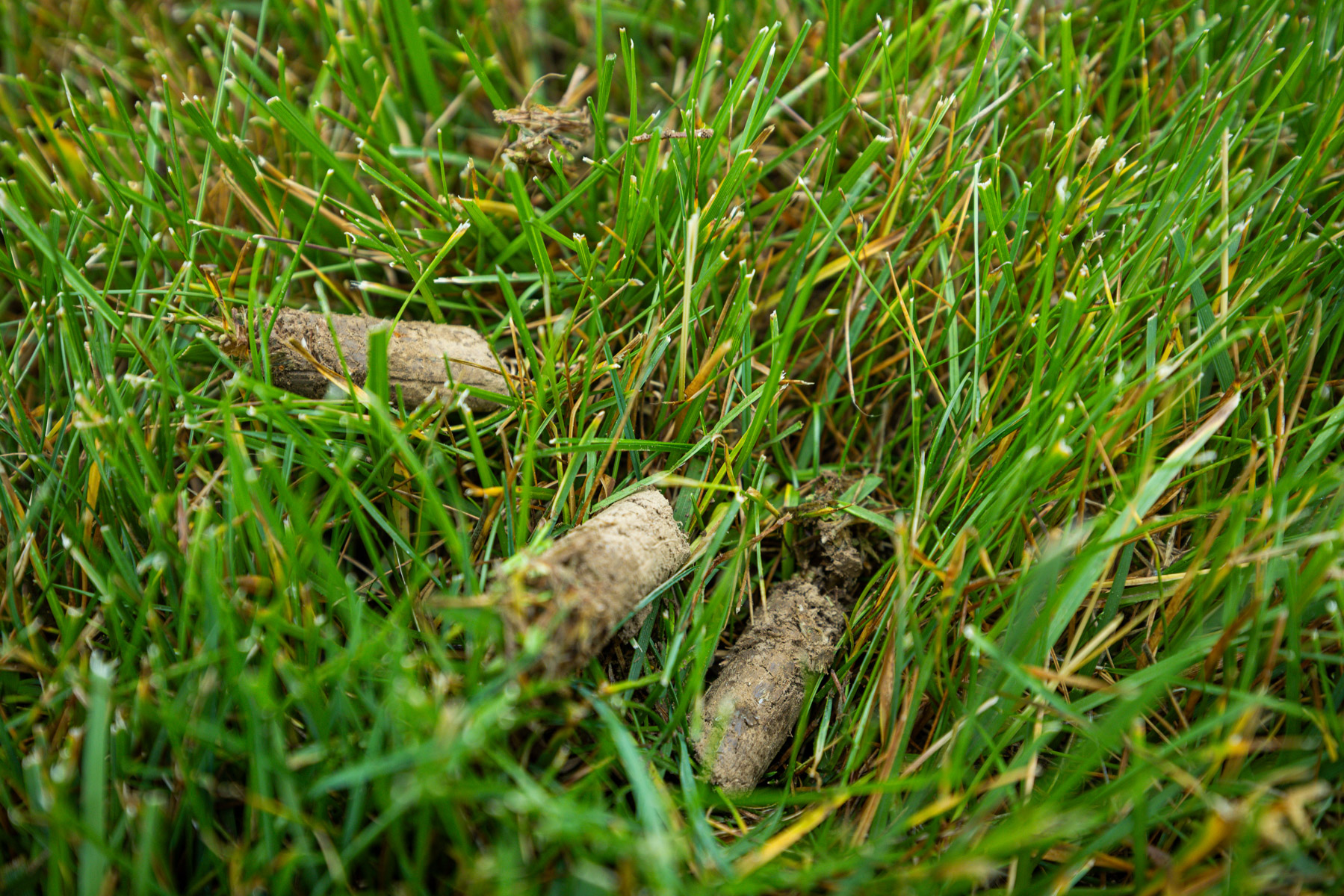
When combining aeration with overseeding, seed settles into the core holes, water collects in those pockets, and the seed stays moist longer - a perfect microclimate for the seeds to germinate in. It's why we don’t recommend overseeding without aeration, unless the seed is being manually raked into fresh topsoil to ensure seed-to-soil contact.
Other methods, like slit seeding, don’t provide the additional benefits of reduced soil compaction which is a must when dealing with the heavy clay soils of Central NJ. Consistent watering afterward, from rain or irrigation, is also essential. While new seeds remain safely dormant until activated by water, once the germination process begins they require consistent moisture to survive.
Is Lawn Aeration and Overseeding Necessary for Every Lawn?
Not always. If your lawn is thick and you're happy with how it looks in August, you may not need to overseed, but keep in mind that it is still very beneficial for the long-term continued health and vitality of your lawn. Lawn aeration on its own can still help, too. Compaction can develop beneath turf that looks healthy, and aeration isn't only for damaged lawns. We have found that homeowners who choose to aerate and overseed annually see the difference in the density of their grass.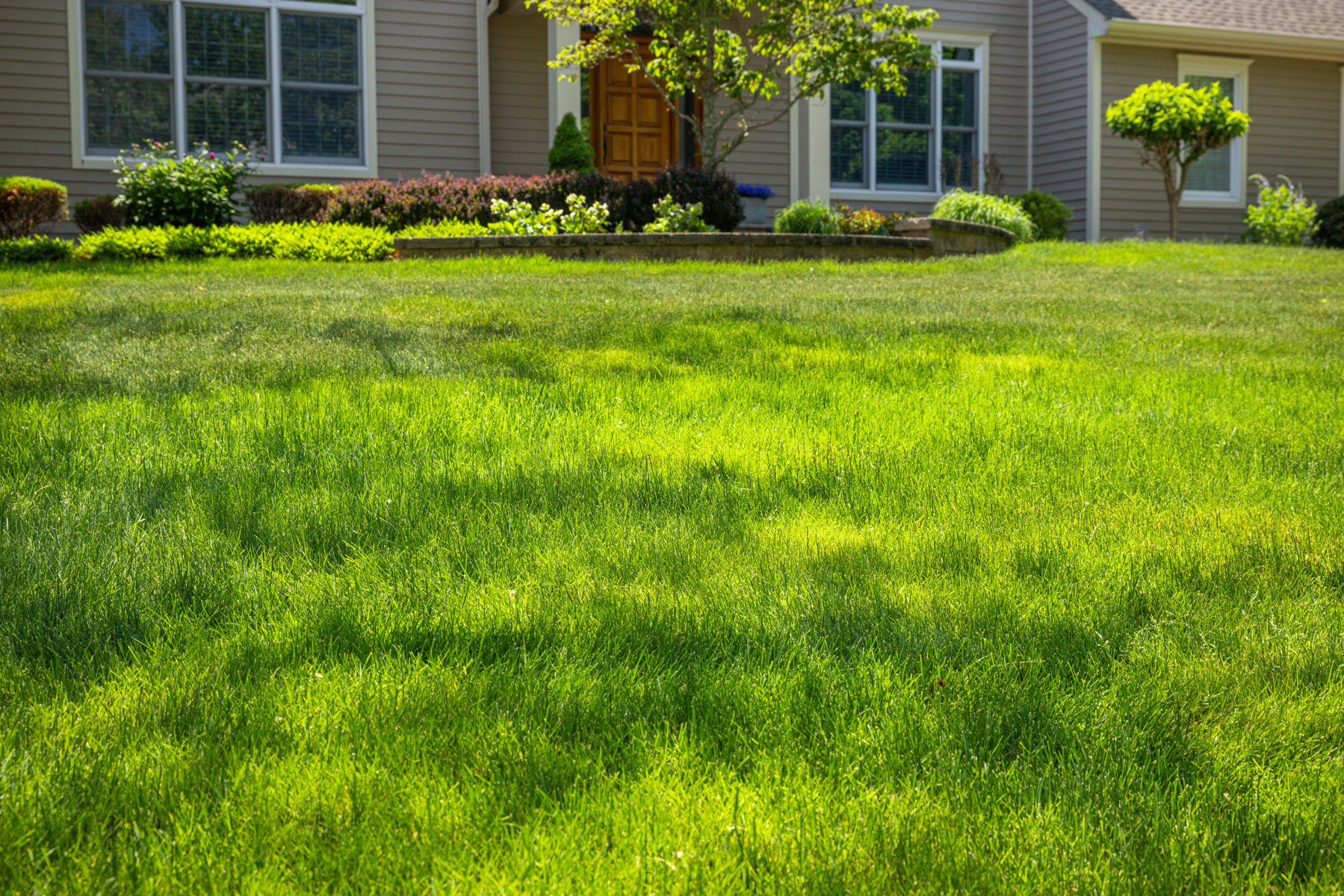
It’s important to recognize what situations or conditions your lawn may be experiencing which can lead to damage when aerating.
- Dormant or severely drought-stressed turf can experience increased stress and slower recovery when aerated (which is why we don’t aerate over the summer)
- Soil that is too dry won’t produce good plugs
- Soil that is too wet can leave ruts, mud tracks, and divots
Lawn care professionals like Green Valley can help you identify possible issues and prescribe the appropriate treatments and the appropriate times.
Signs You May Benefit from Aeration
Still wondering whether to aerate your lawn? Look for thin or bare areas, especially in high-traffic spots, or hard soil that no longer absorbs water well. Poor drainage is another sign that you need aeration, especially with heavy clay soil (like what we have here in Central New Jersey). And if your turf stays thin despite regular fertilizing and watering, it may be a root problem that can be solved with aeration.
When Should You Aerate and Overseed a Lawn in Central New Jersey?
Fall is the best time for the cool-season lawns that we have here. It’s the ideal time when warm soil supports germination, cooler air reduces stress on young grass, and roots are actively growing. During summer, heat already stresses turf, and spring seeding conflicts with crabgrass pre-emergent treatments, which also keep grass seed from germinating.
Timing within the fall season matters, too. The Green Valley team starts aeration and overseeding towards the end of August after the summer heat breaks and stops overseeding in the beginning of October so that new grass has time to establish before the cold winter weather threatens its growth.
Frequently Asked Questions
How long does it take for grass to grow after aeration and overseeding?
With proper watering and good growing conditions, new seed typically germinates within about 14 days for turf type tall fescue. Kentucky Bluegrass takes longer (upwards of 3 weeks) and Perennial Rye is quicker at 5-10 days. Aeration benefits build more gradually, so don't expect immediate visible changes.
Can you walk on a lawn after it has been aerated and overseeded?
Light foot traffic is generally fine, but keep traffic on seeded areas to a minimum while new grass germinates and establishes. Wait to mow until the new grass is about 3 to 4 inches tall.
Should you fertilize before or after aeration and overseeding?
Fertilizer works best when paired with seeding. A starter fertilizer applied with overseeding can support new seed, and, in general, early-fall fertilizing helps grass while it directs energy toward its roots.
Can you aerate a lawn if the soil is too dry or too wet?
It's best to avoid both. Dry, hard soil won't produce good plugs, and soggy soil can create ruts and mud tracks, so adjust equipment settings to soil moisture. Green Valley pros use properly calibrated equipment for this exact purpose.
How often should a lawn in New Jersey be aerated?
Most lawns benefit from core aeration once a year in the fall. Annual aeration and overseeding are especially helpful for lawns with compacted soil, heavy foot traffic, or thinning grass.
Professional Core Aeration and Overseeding from Green Valley Lawn Care
Effective core aeration in Central New Jersey comes down to equipment, technique, and seed. When overseeding, our technicians make a double pass with the aerator and use hand tools where machines can't reach, improving seed-to-soil contact. We adjust equipment settings to soil moisture and compaction, and we use certified, top NTEP-rated 100% turf-type tall fescue seed. Afterward, you'll receive detailed watering instructions to help the new seed establish.
As Rutgers-trained, NJDEP-licensed professionals, we've provided lawn care services in Montgomery Township and the Princeton area since 2002. We can help you create the lush, healthy lawn you’ve dreamed of.
If you think your lawn could benefit from core aeration and overseeding, Green Valley Lawn Care can help you determine the right approach. Fill out our form today to get your quote.